A bachelor's degree is the qualification most graduate-level government jobs ask for, and it also opens postgraduate study. Many graduates try to do everything at once and end up doing nothing well. This guide helps you choose a direction.
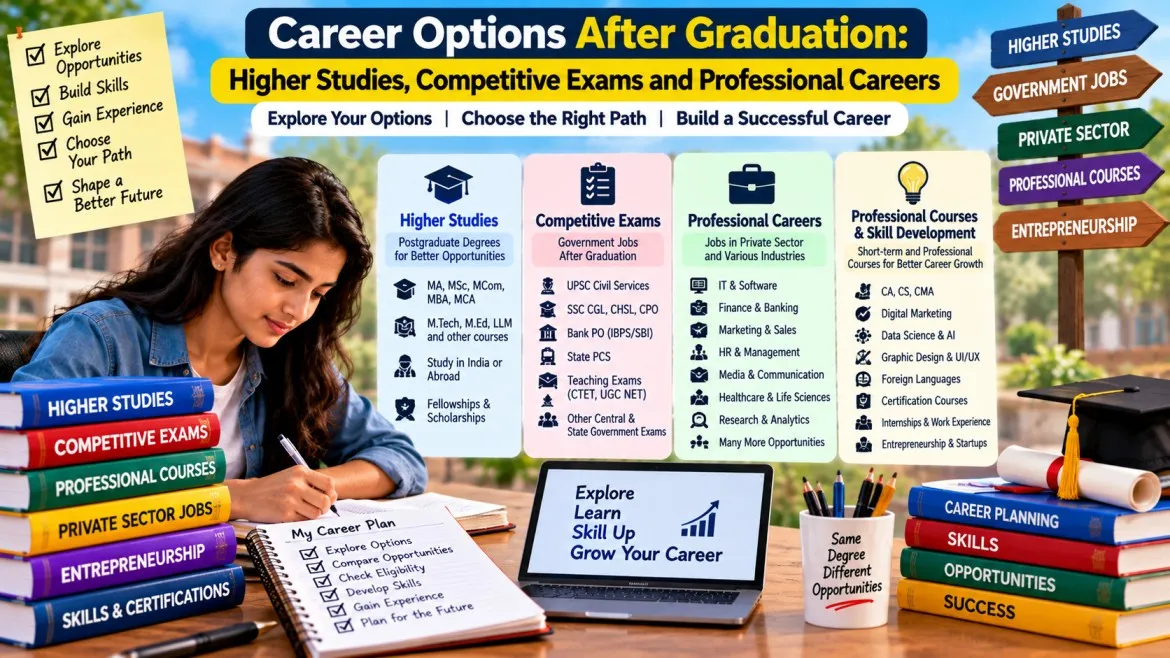
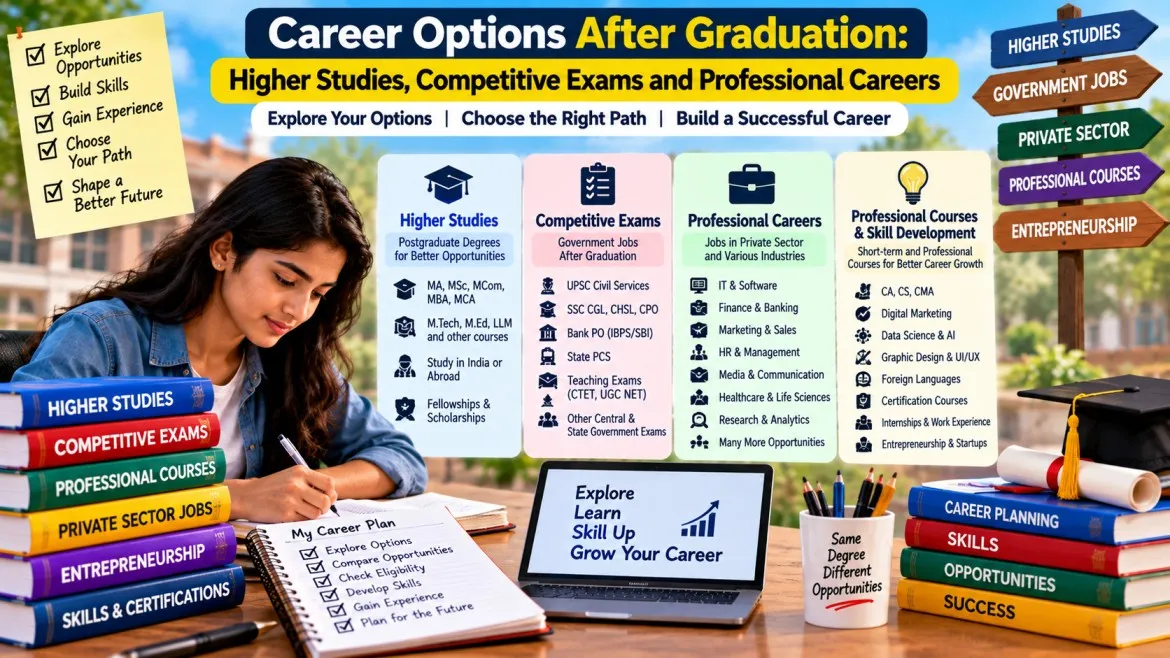
Path 1: Higher studies
- Master's degrees (M.A., M.Sc., M.Com): central universities and many others admit through CUET-PG, conducted by NTA. A master's degree, followed by UGC-NET, is the route to college teaching and research.
- MBA/PGDM: admission through management entrance tests; useful for business, marketing, finance and HR careers.
- LL.B. (three-year): for graduates of any stream who want to practise law or prepare for judicial services.
- B.Ed.: the professional degree for school teaching (see Path 3).
Path 2: Graduate-level competitive exams
The following exams accept graduates of any discipline, according to their recent official notifications (some individual posts need specific subjects):
- UPSC Civil Services Examination: a graduate degree; the general age limit is 21 to 32 years, with relaxations for reserved categories as notified.
- SSC Combined Graduate Level (CGL): a bachelor's degree from a recognised university.
- Bank Probationary Officer (IBPS PO and others): a degree in any discipline.
- UPSC Combined Defence Services (CDS): a degree; the Air Force and Naval Academy entries require specific subjects.
- BPSC Combined Competitive Examination: graduation from a recognised university, for Bihar state administrative and allied services.
These exams differ in syllabus and difficulty. SSC and bank exams test quantitative aptitude, reasoning, English and general awareness. Civil services and state PSC exams add a written mains examination on general studies and optional subjects.
Path 3: Teaching
School teaching in government schools usually needs a B.Ed. (or D.El.Ed. for primary classes) and a pass in a Teacher Eligibility Test such as CTET or a state TET. Bihar recruits teachers through BPSC's Teacher Recruitment Examination (TRE). If you enjoy explaining things and want job stability, this is a strong option.
Path 4: Private sector and self-employment
- Entry-level roles in sales, operations, customer support, IT services and finance hire graduates of all streams.
- Short skill courses (accounting software, digital marketing, data analysis, coding) can make your degree much more employable.
- The National Career Service portal lists jobs and career counselling resources.
How to plan the next two years
- Pick one primary goal — for example SSC CGL, or an M.Sc. — and one backup that shares preparation (bank PO and SSC share much of their syllabus).
- Be honest about finances. If you need income soon, take a job and prepare in the mornings and evenings. Many successful candidates do exactly this.
- Set review points. After each exam cycle, look at your scores and decide whether to continue, switch or combine with work.
Next steps
- Download the latest official notification of your target exam and read the eligibility, syllabus and scheme of examination sections.
- Create your one-time registration on the commission's official portal.
- Read our guide "Plan B for government exam aspirants" for building a backup career without giving up your goal.