Skill-based careers — electricians, technicians, machine operators, healthcare assistants, computer operators and many more — are in steady demand. They are also a practical choice if you need to start earning soon. This guide explains the main government-supported routes.
ITI: trade training
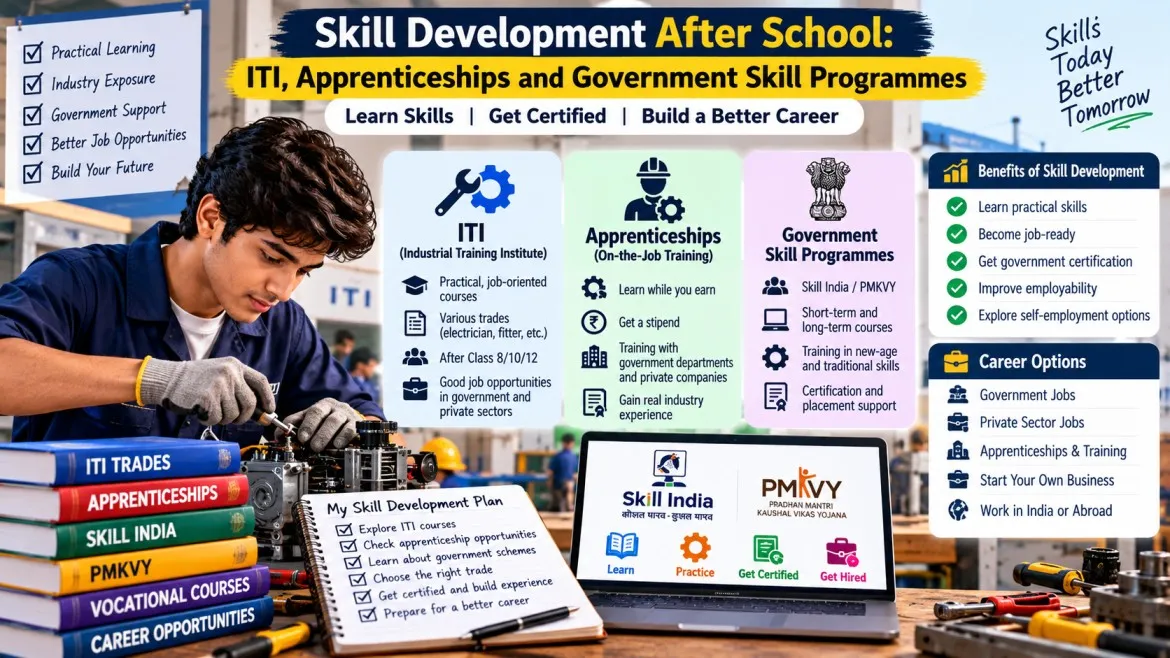
Industrial Training Institutes offer trade courses, usually of one or two years, after Class 8, 10 or 12 depending on the trade. The national framework, curriculum and certification are managed by the Directorate General of Training (DGT). Popular trades include Electrician, Fitter, Electronics Mechanic, Welder, Plumber, Mechanic (Motor Vehicle) and Computer Operator and Programming Assistant.
- Who it suits: students who like hands-on work and want a job-ready qualification quickly.
- What it leads to: industrial jobs, self-employment, apprenticeships, and eligibility for several technical government posts.
Apprenticeships: earn while you learn
Under the apprenticeship schemes, establishments train apprentices on the job and pay a stipend. ITI pass-outs, diploma holders, graduates and even some Class 10/12 candidates can apply, depending on the opportunity. Openings are listed on the official Apprenticeship India portal, where you register, search by location and trade, and apply.
A completed apprenticeship gives you real workplace experience, and a National Apprenticeship Certificate is accepted as a qualification for some government posts — for example, certain railway Level-1 posts list it alongside ITI.
Short-term skill courses
The Skill India Digital Hub brings together government skill courses, many free or low-cost, in areas such as IT, retail, healthcare, electronics and logistics. It also lists training centres and certification. In Bihar, the Bihar Skill Development Mission runs state skill programmes; check its official website for current schemes and centres.
Finding jobs after training
- National Career Service (NCS) portal: register for job listings, job fairs and career counselling.
- Campus and apprenticeship placements through your ITI or training centre.
- Government recruitment: watch for technical posts in railways, PSUs and state departments that ask for your trade.
Choosing a trade or course
- Check which industries hire in your district or nearby cities.
- Visit the institute: look at the workshop, equipment and placement record.
- Confirm the course is recognised (NCVT/DGT for ITI trades) before paying fees.
- Plan the next step — apprenticeship, job, a diploma via lateral entry, or your own business.
Next steps
- Create your profile on the Apprenticeship India and NCS portals.
- Explore courses on the Skill India Digital Hub.
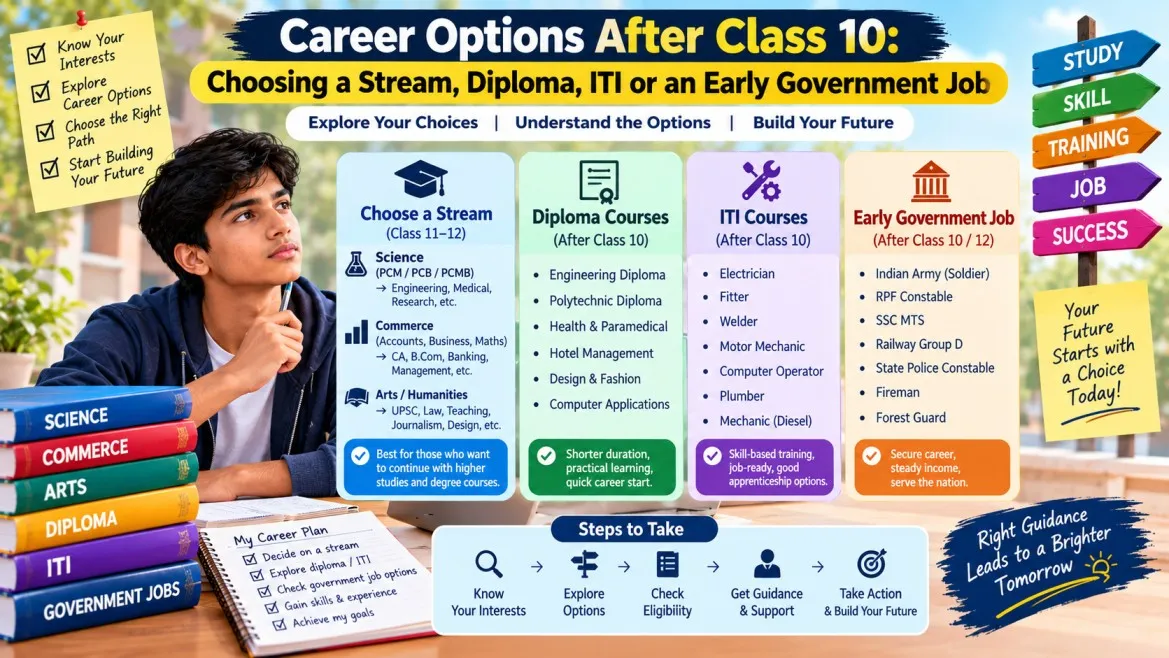
- Read our guide on career options after Class 10 for how ITI compares with a diploma or Class 11–12.