For many courses after Class 12, admission depends on an entrance examination rather than board marks alone. Knowing which exam leads where — and applying on time — is half the battle.
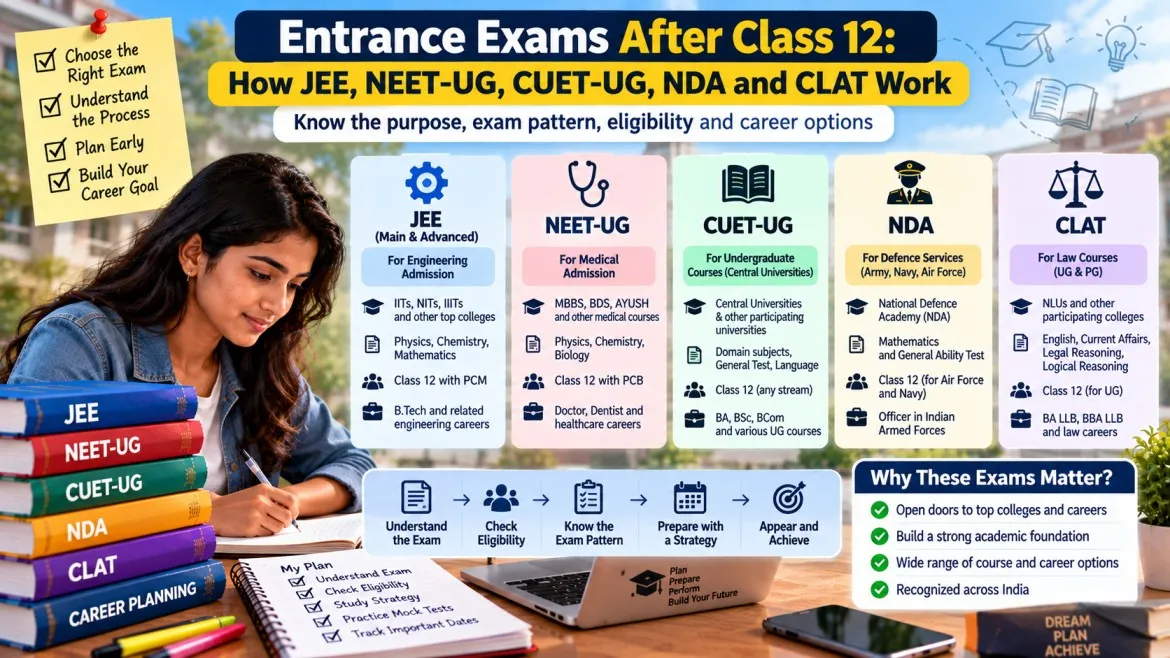
JEE Main and JEE (Advanced): engineering
- Conducted by: JEE Main by the National Testing Agency (NTA); JEE (Advanced) by the IITs.
- Leads to: JEE Main is used for admission to NITs, IIITs and other participating institutes, and as the qualifying step for JEE (Advanced). JEE (Advanced) is for admission to the IITs.
- For: students with Physics, Chemistry and Mathematics in Class 12.
NEET-UG: medicine
- Conducted by: NTA.
- Leads to: MBBS, BDS, AYUSH and certain other medical courses across India.
- For: students with Physics, Chemistry and Biology.
CUET-UG: central and participating universities
- Conducted by: NTA.
- Leads to: undergraduate programmes in central universities and other universities that choose to use CUET scores — B.A., B.Sc., B.Com and many more.
- For: students of every stream; you choose test subjects according to the programmes you want, so check each university's subject requirements before applying.
NDA & NA examination: defence officer training
- Conducted by: UPSC, usually twice a year.
- Leads to: training at the National Defence Academy and the Indian Naval Academy for Army, Navy and Air Force officer careers.
- For: unmarried candidates within the notified age band; the Army wing accepts 12th pass in any stream, while the Air Force and Navy wings require Physics, Chemistry and Mathematics. Selection includes a written exam and an SSB interview.
CLAT: law
- Conducted by: the Consortium of National Law Universities.
- Leads to: five-year integrated law programmes at National Law Universities.
- For: students of any stream.
State-level entrances
Many states run their own entrance exams for engineering, agriculture, nursing, polytechnic and other courses. In Bihar, several of these are conducted by the Bihar Combined Entrance Competitive Examination Board (BCECEB). Check your state's official board for the current notice.
Applying without mistakes
- Read the information bulletin for the current year before registering. Eligibility, the number of attempts and the syllabus can change.
- Use your own email and mobile number — every update and password reset goes there.
- Keep documents ready: Class 10 certificate (for date of birth), Class 12 marksheet or admit card, category/EWS/PwD certificates, and a recent photograph and signature in the required format. DigiLocker helps you keep verified copies.
- Use only official websites for registration, fee payment, admit cards and results. Fake sites copy official designs to collect money and data.
- Note the correction window. Most exams allow limited corrections for a few days after the application closes.
Next steps
- Pick the exams that match your stream and goals, and bookmark their official websites.
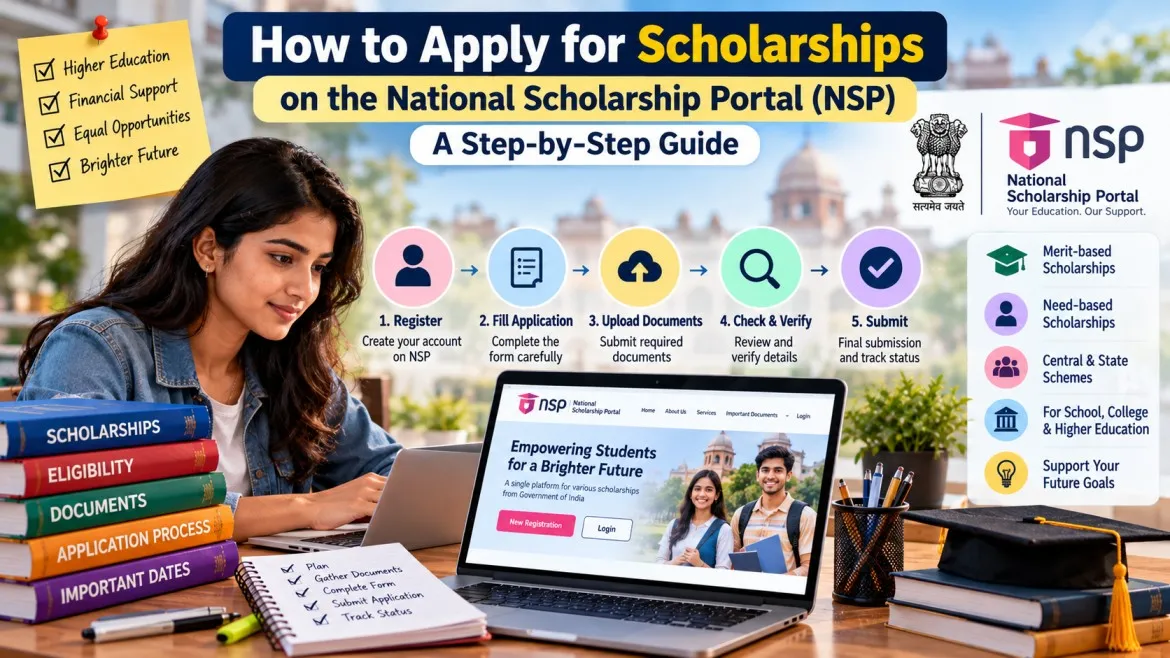
- Look up scholarships for your course on the National Scholarship Portal once you are admitted.