Preparing for a government exam takes years of effort for many candidates, and a few posts are contested by a very large number of applicants. That does not mean you should give up. It does mean that planning only one path is risky. A backup plan does not show a lack of confidence. It protects your time, your income and your peace of mind while you keep working toward your goal.
Why a Plan B is not a sign of weak commitment
Think of a Plan B as insurance. You study seriously for your main goal, and at the same time you build skills, experience and income options that will help whatever happens. Many aspirants who have no plan feel stuck after a failed attempt. Those with a plan can move ahead with confidence.
Step 1: Set a time limit and review points
An open-ended plan such as "I will study until I get selected" can cost you years. Instead, choose:
- a target period, for example two or three exam cycles,
- review points every six months, where you check your mock scores, your progress and your finances,
- clear questions to answer at each review: Am I improving? Is my timeline realistic? What is my backup if this cycle does not work out?
Also check the age limits and number of attempts allowed for the exams you want, so you know how long your window is. Look these up in each notification, because they differ between recruitments and categories.
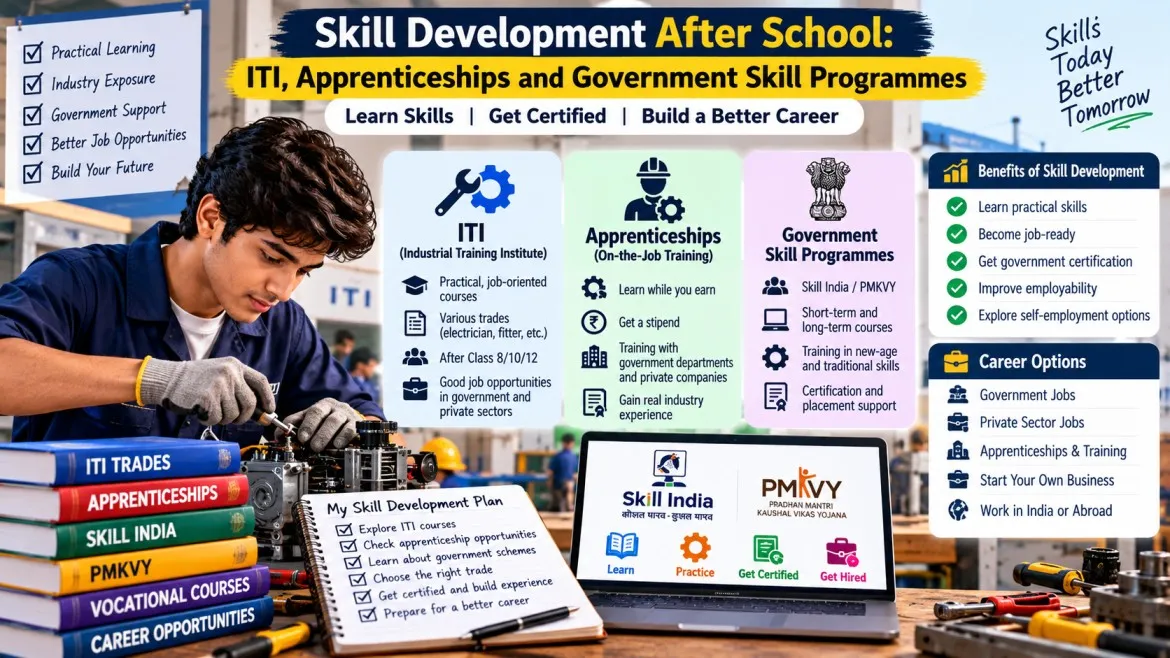
Step 2: Build skills that help in any career
You can develop these while you prepare:
- Computer skills: word processing, spreadsheets, email and basic internet use.
- Typing: speed and accuracy, which are also needed for some exams.
- Communication: clear writing and speaking in Hindi and English.
- Digital skills: how to search for information, use online forms safely and manage documents.
- A job-related skill: something you can show to an employer, such as accounting basics, data entry, teaching, or design.
Spend a few hours each week on one skill. Small, regular effort adds up.
Step 3: Use free government career resources
The National Career Service (NCS) portal at ncs.gov.in is run by the Ministry of Labour and Employment. According to the ministry's reply in Parliament, it provides job search and matching, career counselling and vocational guidance through its digital platform, and its services are free and voluntary. The ministry has also said the portal offers registered job seekers free, self-paced online training.
How to use it:
- Register on the portal with your details.
- Complete your profile with your education and skills.
- Look at the jobs and the counselling and training sections.
- Use it alongside, not instead of, other sources of jobs.
Check the portal for the current list of services, as it may change.
Step 4: Keep other options open
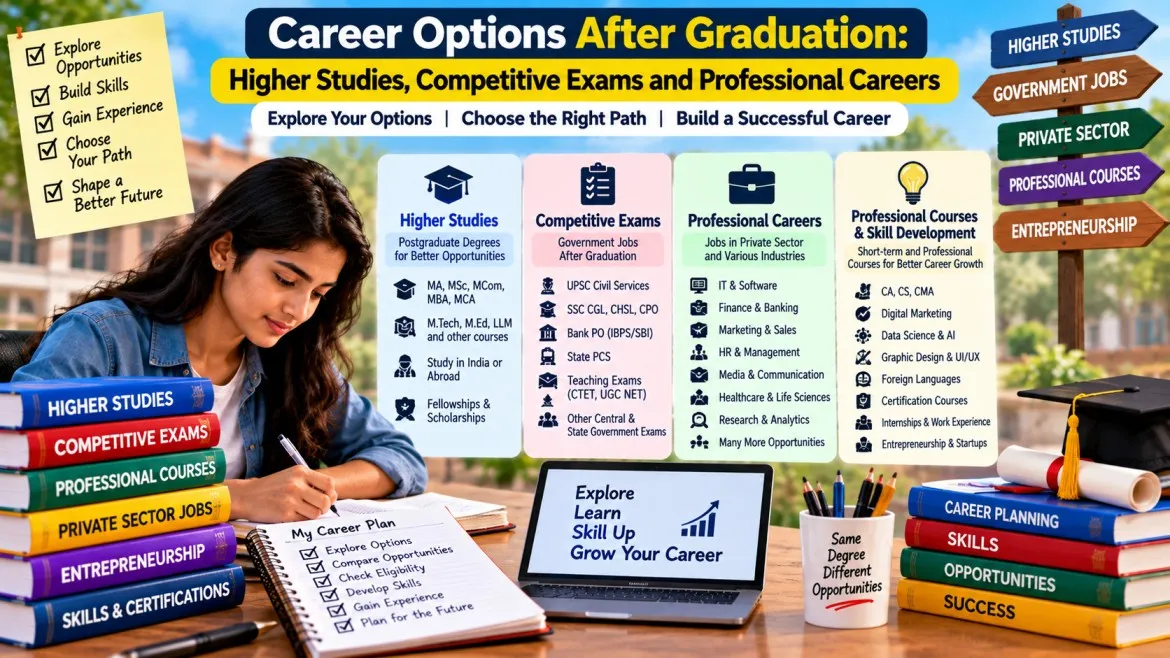
- Related exams: Many exams have similar eligibility. Applying to more than one can make good use of the same preparation, as long as you can manage the different syllabi.
- Private sector jobs: Some may allow you to continue to prepare for exams, especially if your hours are fixed.
- Teaching or tuition: Teaching what you know also helps your own revision.
- Apprenticeships and internships: These give you experience and a work history, and the NCS portal lists information about them.
- Further study: A course that improves your qualification can be worth considering if it matches your long-term plan.
Step 5: Plan your finances
- Calculate how much you need each month and for how long you can manage without income.
- Avoid taking large loans for coaching or preparation.
- Try to keep some regular income, even small, if your family situation needs it.
- Talk honestly with your family about timelines and expectations.
A simple decision table for your review
| Question | If the answer is yes | If the answer is no |
|---|---|---|
| Are my mock scores improving over time? | Continue your plan | Change your strategy or study method |
| Do I have a skill that earns income? | Keep it going | Start building one now |
| Is my finance plan realistic for the next 6 months? | Continue | Adjust now, not later |
| Do I still have attempts and age left? | Plan the next attempt | Shift focus to alternative careers |
Common mistakes
- Waiting for the result before thinking about alternatives.
- Studying without a deadline.
- Ignoring your health and mental rest.
- Comparing yourself with others instead of tracking your own progress.
- Putting off skill-building because you feel it takes time away from your exam.
What to do next
- Write down your target period and your first review date.
- List two skills you can improve in the next three months.
- Register on the NCS portal and explore what is available.
- Talk to a family member or mentor about your plan.
- Review your plan at each exam cycle.
Frequently asked questions
Will working part-time hurt my chances in the exam?
It depends on your hours and energy. If a job leaves you enough time to study consistently, it can help. If not, consider shorter work or a flexible arrangement.
Is it too late for me to start building a backup?
No. Start with one small step today. Skills and experience can be built at any age.
Should I prepare for many exams at once?
Only if their syllabi overlap and you can manage the workload. Spreading yourself too thin can lower your performance in all of them.
Is the NCS portal only for private jobs?
No. It lists a mix of opportunities, and you should check the current listings on the portal.
Conclusion
A backup plan lets you work toward your government job goal with less fear. Set a timeline, build useful skills, use free resources, protect your finances and review your progress honestly. Doing this gives you options whatever the outcome.